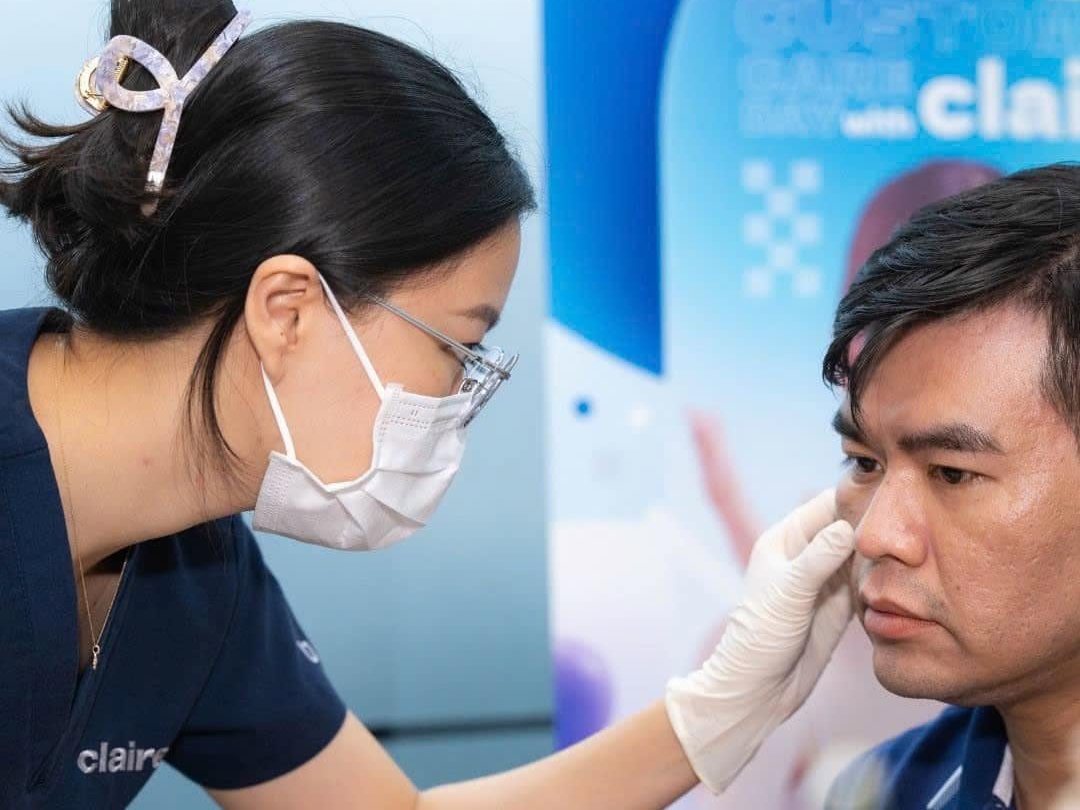
Claire brought an acne care guide to students, parents and teachers at ABCIS, so young people can understand acne, prevent it properly and know when to see a doctor.
Contents
- Why did Claire take the conversation about acne to schools?
- Clear Skin Campaign at ABCIS
- An acne care guide for teenagers
- Feeling down about acne is normal
- What is acne?
- What causes acne?
- Common misconceptions
- Marks or scars?
- Eight habits that help control acne
- Cleansing the right way
- About acne-fighting actives
- Does light therapy help reduce acne?
- What if you've squeezed a spot?
- When should you see a dermatologist?
- A note for parents
- The journey continues
Acne often begins in exactly the years when young people are most sensitive about how they look. For many, it's not just a few spots on the face, but feeling shy about mirrors, photos, even going to class. That's why Claire wanted to bring skin care knowledge closer to them, right where they study every day.
That's the reason behind Clear Skin Campaign, Claire's community programme, with the activity "Acne Away Action Plan" held in 2024 at The Anglophone British Curriculum International School (ABCIS).
Why did Claire take the conversation about acne to schools?
Acne is one of the most common skin concerns in puberty and early adulthood. A study published in 2025 in the British Journal of Dermatology estimates that around 9.8% of people aged 10 to 24 worldwide have acne.
What we see most in clinic isn't severe acne, but skin that has been harmed by misinformation: squeezing spots at home, dabbing on toothpaste, using too many products at once, or skipping moisturiser in the belief that oily skin doesn't need it. With early, accurate knowledge, many marks and scars might never have appeared.
We believe a simple conversation at the right time can help young people avoid those mistakes, and feel more at ease with their skin.
Clear Skin Campaign at ABCIS
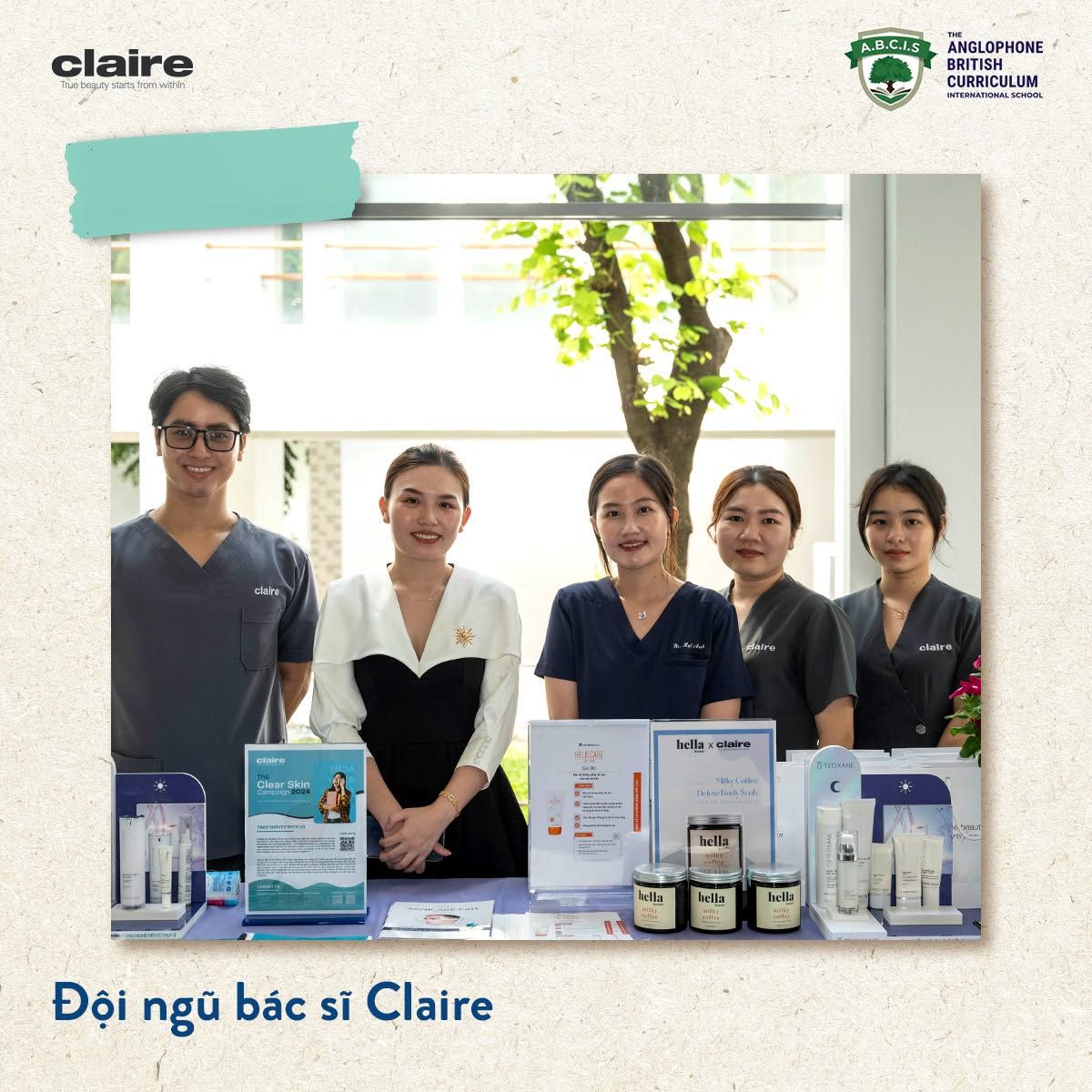
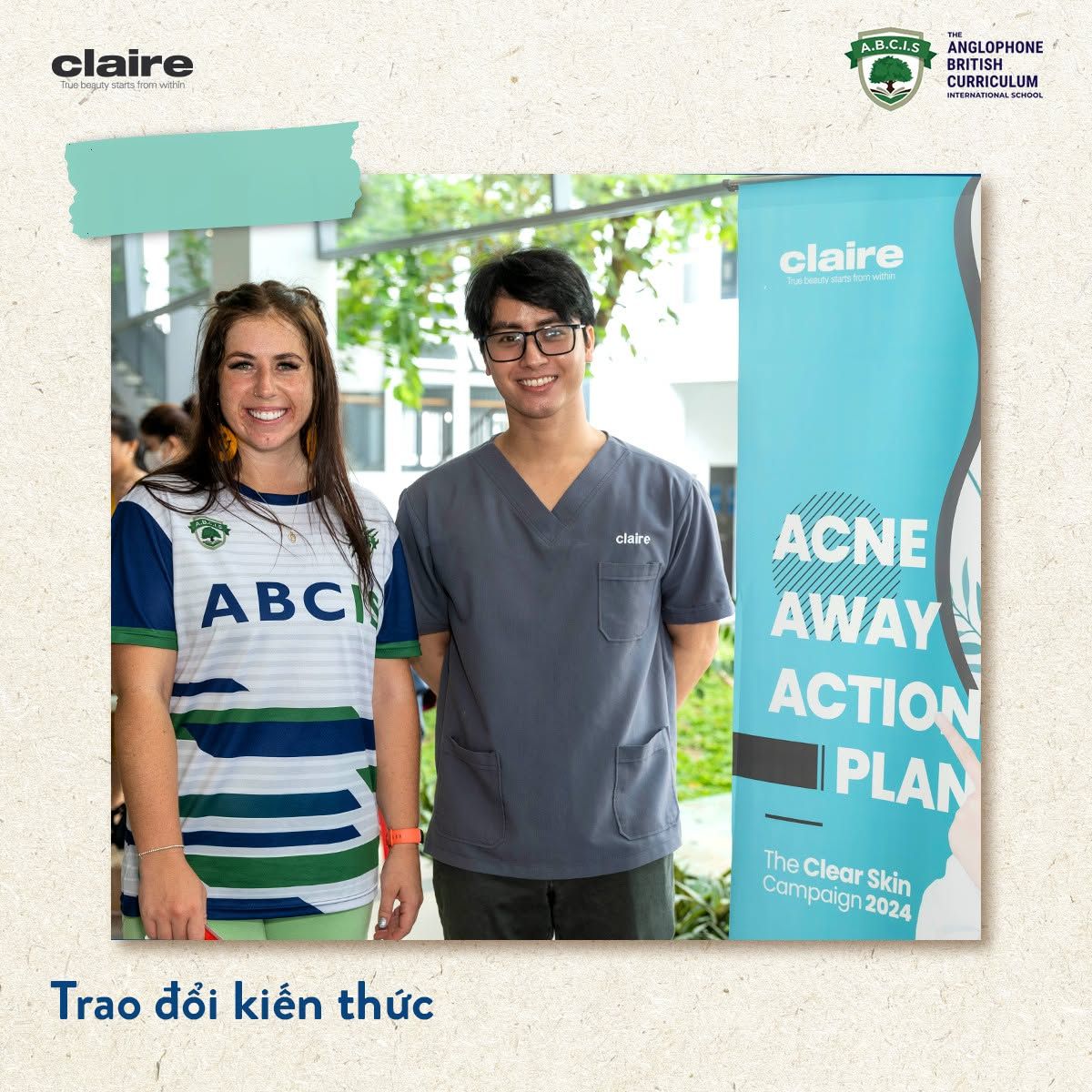
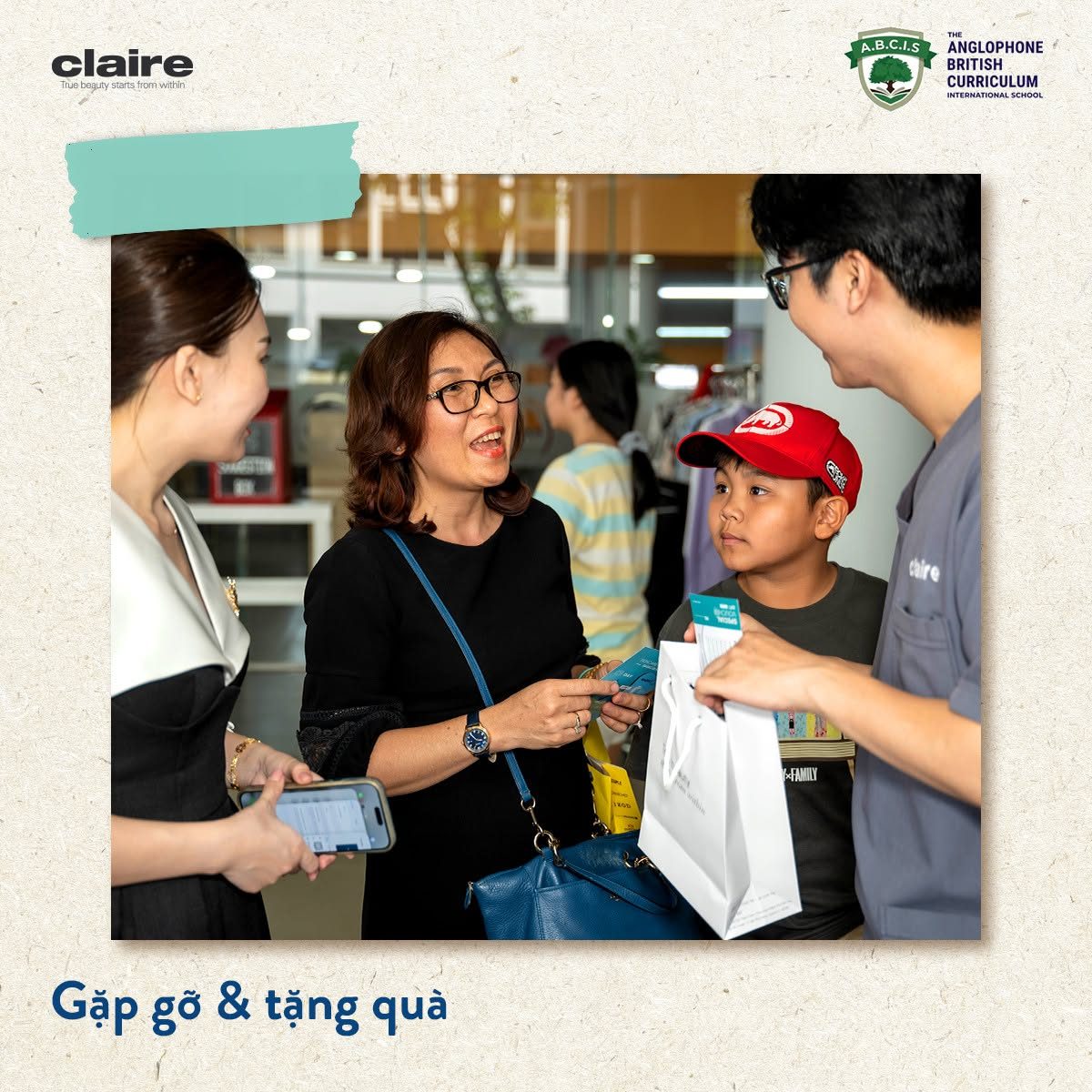
For the activity "Understand, prevent and treat acne", Claire's doctors and specialists came to the school to meet students, parents and teachers. Everyone could ask questions about their own skin directly and receive an acne care guide and small gifts from Claire.
We didn't come to sell a treatment. We came to listen to students talk about their skin, answer common questions and share simple, safe care they can do themselves every day.
An acne care guide for teenagers
Claire wrote the guide especially for school students, in friendly, accessible language. Below are the most important points from the guide that we want every young person, and parents too, to know.
Feeling down about acne is normal
Acne can make you feel frustrated, tired, even unwilling to go out. Those feelings are completely normal, and you are not alone. What discourages many people most is the sense that "nothing helps". The good news is that acne can be controlled when you understand it properly and are patient.
What is acne?
Acne forms when pores are blocked by excess oil and dead skin cells. Common types include blackheads, whiteheads (closed comedones) and red inflamed spots, which may contain pus. Acne usually appears on the face, but can also appear on the back, chest and shoulders.
What causes acne?
- Hormones: hormonal changes during puberty make the skin produce more oil.
- Genetics: if your parents had acne, you may be more prone to it.
- Acne-causing bacteria grow in blocked pores.
- Stress: exam season and study pressure can make acne worse.
- Friction and sweat: helmets, headbands and tight sportswear trap heat and sweat on the skin.
- Some medications can cause acne as a side effect.
- Diet: for some people, foods high in sugar and refined carbohydrates are linked to acne.
Common misconceptions
Acne isn't caused by a "dirty" face, or by drinking too little water. Makeup doesn't cause acne by itself, unless the products don't suit you or aren't removed thoroughly. Washing too often or scrubbing hard won't clear acne; it makes skin more easily irritated.
Marks or scars?
After a spot heals, if what's left is flat and red, pink or brown, that's a mark, which usually fades over time. If it is sunken or raised above the skin's surface, that's a scar, and it should be assessed by a doctor. The best way to avoid scars is not to squeeze spots and to treat inflamed acne early.
Eight habits that help control acne
- Care for your skin regularly, morning and evening: cleanse, treat (if needed), moisturise, protect from the sun.
- Find ways to reduce stress: get enough sleep, move, walk, keep a journal, spend time with loved ones.
- Don't squeeze or pick spots.
- Change pillowcases and face towels often.
- Notice what touches your face: phone, earphones, hands.
- Shower and change straight after sport or heavy sweating.
- Eat a balanced diet, and cut down on sweets and sugary drinks.
- If you take medication or supplements, ask your doctor whether they might cause acne.
Cleansing the right way
Use lukewarm water, not hot water. Take just enough gentle cleanser, massage lightly for about 30 to 60 seconds, rinse and pat dry with a clean towel without rubbing. Oily skin still needs a light moisturiser, and a non-comedogenic sunscreen every day.
About acne-fighting actives
Actives with strong evidence for treating acne include benzoyl peroxide, salicylic acid (BHA), retinoids and azelaic acid. For school-age teens, we recommend using them under the guidance of a doctor or specialist, starting at low concentrations and adding only one new product at a time to avoid irritation.
Does light therapy help reduce acne?
Acne-causing bacteria (C. acnes) produce porphyrins. Blue light, at around 415 nm, activates these porphyrins and generates oxidising radicals that reduce bacteria. Red light, at around 630 to 660 nm, goes deeper into the skin and reduces inflammation. That's why the two are often combined.
Research reviews show that light therapy can support a reduction in inflammatory acne, but results vary between individuals and it doesn't replace proper skin care or medication prescribed by a doctor. Treatment should be done at a qualified clinic, with devices and exposure times suited to your skin.
What if you've squeezed a spot?
Keep the area clean and wash your face gently twice a day. Don't apply acne treatments directly to broken skin until it heals. Moisturise and use sunscreen to limit marks. And don't blame yourself: everyone has done it.
When should you see a dermatologist?
When inflamed spots are large, painful and long-lasting, when acne leaves marks and scars, or when a few months of proper care haven't helped. A doctor will identify the type and severity of acne and choose the right treatment for each person, because there is no single acne treatment for everyone.
A note for parents
For your child, acne can be a very big deal. Instead of saying "it's just spots", listen to them, help them build a simple skin care habit, and take them to a doctor when inflamed acne is widespread or starts to scar. Family support helps young people stay persistent far more easily.
The journey continues
The Clear Skin Campaign is part of how Claire sees its role: caring for healthy skin doesn't only happen in the treatment room, it begins with accurate knowledge shared widely. We hope to keep bringing conversations like this to more schools and communities.
If your school or organisation would like to work with Claire on skin health activities for students, please contact us via the hotline or Zalo of either location.
If you'd like to know what your skin needs, book a Da Ký™ session at Claire Wellness. Phú Mỹ Hưng (District 7) hotline: 0812 345 785 · Tân Sơn Nhất (Tân Bình): 0812 345 791.
References
- Zhu Z, et al. Global, regional and national burdens of acne vulgaris in adolescents and young adults aged 10–24 years from 1990 to 2021. British Journal of Dermatology, 2025. View source
- American Academy of Dermatology. Acne: tips for managing. View source
- Pei S, Inamadar AC, Adya KA, Tsoukas MM. Light-based therapies in acne treatment. Indian Dermatology Online Journal, 2015. View source
- Barbaric J, et al. Light therapies for acne. Cochrane Database of Systematic Reviews, 2016. View source
This article is for reference only and does not replace a doctor's diagnosis and advice. Results of each method vary depending on your skin.

Claire Wellness Editorial Team
The Claire Wellness Editorial Team represents the doctors and specialists who write and review articles at Claire together, hoping to help you understand your skin before choosing any treatment.
Contact Claire Wellness
Claire Wellness skin care centre · Website: www.claire.vn · Fanpage: facebook.com/clairevietnam · Instagram: @clairewellnessvn
Claire Wellness Phú Mỹ Hưng
42 Street 17, Phú Mỹ Hưng, District 7, Ho Chi Minh City
Hotline / Zalo: 0812 345 785
Opening hours: 09:00 – 18:00, Monday – Sunday
Claire Wellness Tân Sơn Nhất
3E Phổ Quang, Ward 2, Tân Bình District, Ho Chi Minh City (Him Lam villa area, opposite Tâm Anh Hospital)
Hotline / Zalo: 0812 345 791
Opening hours: 09:00 – 18:00, Monday – Sunday
Get advice now
Leave your phone number, and Claire will call you back to advise and hold an appointment for you.