
Nine gentle months
for a mother's skin
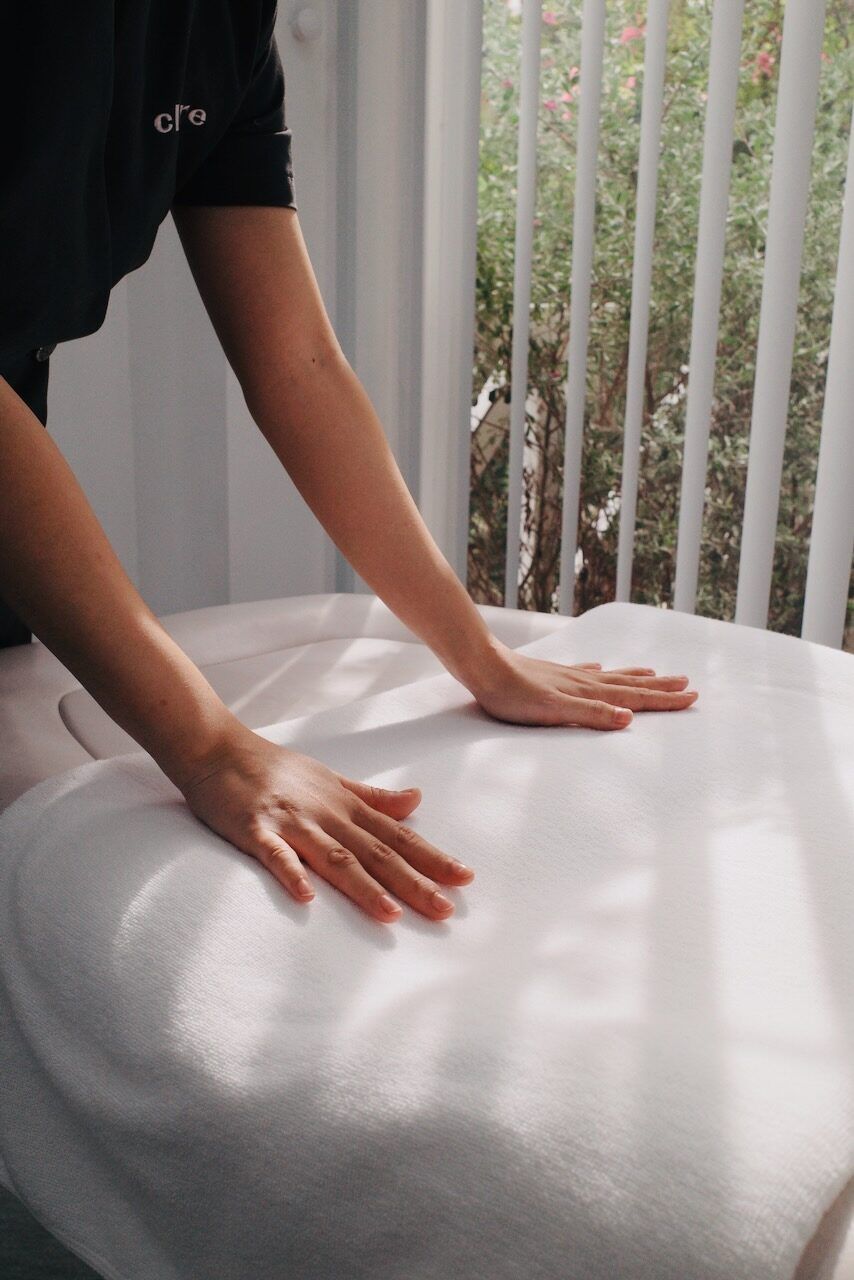
Being pregnant doesn't mean you have to stop caring for yourself; you just need to choose well. Claire builds with you a safe routine for each stage, with gentle rituals: no energy waves, no energy devices.
Some days your skin changes so much you hardly recognise yourself in the mirror. That's completely normal, and you don't have to go through it alone.
- No energy waves, no energy devices
- Gentle ingredients
- A minimal routine
- In consultation with your obstetrician

Why does skin change during pregnancy?
Pregnancy hormones affect almost everything: skin may become oilier and break out more, darken or develop melasma on the cheeks, forehead and upper lip; the belly, breasts and thighs stretch and become dry and itchy; skin also becomes more sensitive to familiar products.
Most of these changes ease after the birth. In the meantime, what matters most is gentle care, avoiding unsuitable ingredients, and not blaming yourself for skin that's "not like before".
A simple routine, enough for all nine months
No need for many steps. Just the right products, consistently every day.
Morning
- Gentle cleansingA pH-balanced cleanser and lukewarm water.
- HydrateA hyaluronic acid or niacinamide serum.
- MoisturiseA moisturiser with ceramides and little fragrance.
- Mineral sunscreenApply enough, and reapply when going out.
Evening
- Remove makeup & cleanseGently, without rubbing.
- Light treatment (if needed)Azelaic acid for acne and marks, as advised.
- MoisturiseFor the face, belly, breasts and thighs.
Stage by stage
- First trimesterListen
Hormones change quickly, and skin may be more sensitive, oilier or more prone to breakouts. This is the time to review your skin care shelf: pause the ingredients to avoid and keep your routine very simple.
- Second trimesterNourish
Many mothers begin to notice darker skin, pregnancy melasma and a tight, dry belly. Be more thorough with sunscreen, and moisturise both face and body every day.
- Third trimesterAt ease
The body is more tired and sleep is harder. Prioritise gentle rituals with short sessions and comfortable positions, and rest as much as you can.
- Sau sinhRecovery
Hormones gradually settle, and some of the pigmentation fades by itself. If you're breastfeeding, we still choose ingredients cautiously and discuss carefully before returning to technology-based treatments.
When is it better to wait until after the birth?
Some goals, such as clearing melasma, technology-based rejuvenation, or treating acne with oral medication, are safer and more effective after the birth, or after you stop breastfeeding.
If we see an issue that needs an obstetrician or dermatologist to examine in person, we'll tell you clearly. The best care during pregnancy sometimes means knowing what should wait.
A few words for mothers
- Less, but enough.A minimal routine with a few gentle products is far safer than a shelf full of actives.
- Add one product at a time.Skin reacts more easily during pregnancy. Test a new product on a small area before using it on your whole face.
- Wear sunscreen every day.Pregnancy melasma darkens very quickly in the sun. A wide-brimmed hat and mineral sunscreen are a mother's best friends.
- Always ask your obstetrician.Before using medication, treatment products or any treatment, talk to the doctor monitoring your pregnancy.
Bring what you're using
One consultation and the few products in your bag, and we'll go through each one together: what to keep and what to pause until your baby arrives.
The content on this page is for reference only and does not replace the advice of the obstetrician monitoring your pregnancy.